There are many things I complain about every day, but the level varies. The most severe level of complaint is when the problem involves feelings. It is difficult to treat and resolve.
Now, I am learning how to put all the displeasure in this life not on my feelings but only on my brain so that I can find a solution.
There is a big difference between the two.
If I put the problem on my feelings, I am filled with doubt, sadness, and confusion. The solution is difficult to find because the subjectivity is very high.
But if I put it in my brain, usually, various solutions will appear to solve it. And I can be more assertive.
What problems do I complain about the most?
The work-related issues involving my staff, colleagues, and boss. Since I spend eight hours a day, five days a week with them, many problems arise. Conflicts are frequently up, and I have to deal with them.
I believe this:
Everyone has their own problems. Never feel that you are alone and there is no way out of your problems.
In my belief, playing the lottery is considered haram. Let me talk about a different and more uplifting topic.
When meeting old friends, the conversation revolves around children, careers, and sharing information about other friends in college or the surrounding environment. For those whose social status is not good, such chats frustrate them. Nothing to tell from their side except the sad and disappointing ones. That is one of the reasons why many people reject reunion parties.
I understand their feeling. Old memories are only good to write about, not to retell, because their influence is not good psychologically. I feel tired after discussing old memories, even though, for others, they might be funny. However, they are different if written down. I can see more clearly from various aspects, learn lessons, and soften my heart.
So, after chatting about family and work, I usually ask what they will do in the future. It is really an interesting topic to explore.
This weekend, I had the pleasure of welcoming two old friends and their families to my home.
My friend, Idy, is working on a concept for a homestay that will be integrated with a poultry farm, focusing on preserving local poultry germplasm. He works as a consultant for a large poultry company in South Sumatra.
Another friend who came the day before, Hen, told me about the community empowerment activities she leads. He is implementing a waste management initiative project integrated with a poultry farm. This activity will contribute significantly to reducing domestic waste, including wasted food, if adopted by the government to be socialized on a large scale.
Reunions like this really leave something exciting and provoke new ideas in my head. I also asked myself, what will I do in the future?
I have such ideals and ambitions; however, they remain discourses. These thoughts are refreshing, beneficial for self-development, and will clearly contribute to the surrounding environment.
How about you? Do you have interesting ambitions for the future (after retiring from working in an office)?
In an interview, the President of Indonesia, Prabowo Subianto, expressed his admiration for the books of Paulo Coelho. Fortunately, I have some of his books and plan to reread them.
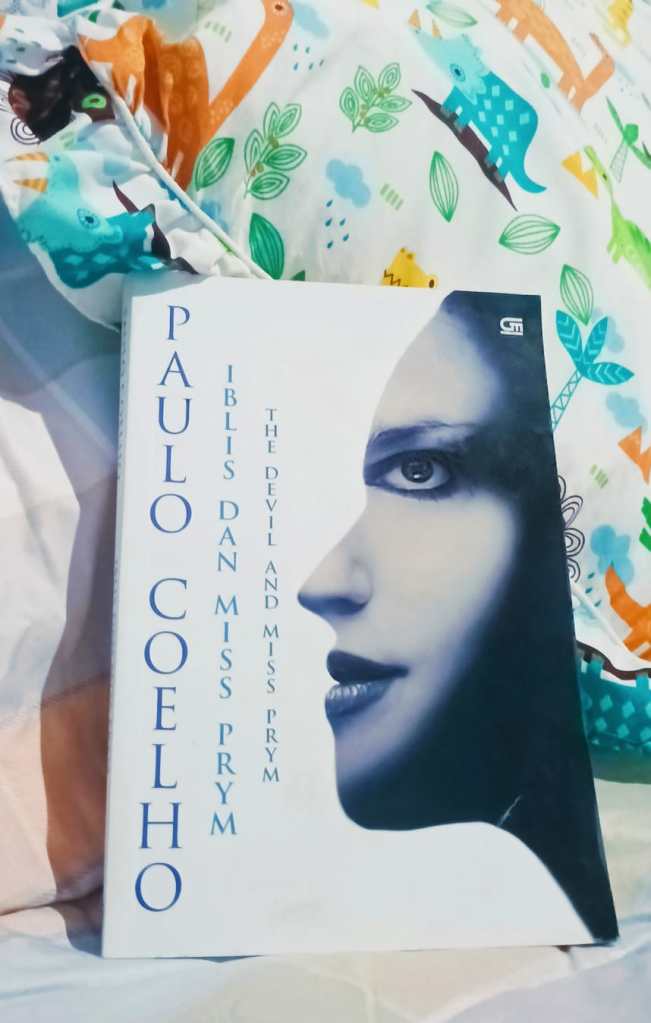
One of the books that I keep next to my bed is The Devil and Miss Prym.
Sometimes, books loved by famous figures can spark people’s interest in reading them, too.
Lately, I want to reread my book collection. I have no intention of buying new books. I used to have about 2000 books, and with my sister, I managed a community library. We have donated some books, and I only keep my favorites.
Along with Paulo Coelho’s books, I want to reread novels by Rosamunde Pilcher, who is my favorite novelist.
Ramadhan is coming soon. Muslims are making various preparations so that all the necessities and atmosphere in the household support performing prayers and fasting.
Like many generations that lived in the 1970s, I grew up with a simple lifestyle. Unlike today, when I can easily purchase various necessities for the fasting month—such as basic groceries, instant food, Takjil, and more—during my childhood, most of the cooking and baking for breaking the fast or for Eid was done by my mother, with help from other family members.
One thing that stands out to me as Eid approaches is the hustle and bustle at home as we prepare cookies and traditional foods. My mother was the master and trendsetter for cookies in our neighborhood. Almost all the mothers nearby came over to ask, “What cookies are you planning to make for Eid? Do you have any new recipes? Can I borrow the recipe?” They even borrowed cooking utensils from her.
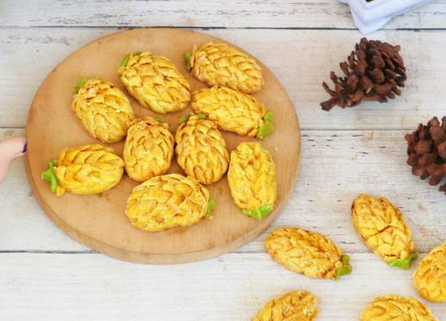
Nastar, the most popular cookies in Eid (The Lebaran Day)
The aroma of cookies could be smelled in the houses and on the streets, especially a week before Eid. That was the challenging time of fasting for kids. Amid their peak hunger, the smell of baking cakes could make them stop fasting.
In my house, there was a custom that all the children had to help make cakes. At that time, four of us were still in elementary school, and the other 2 were still in kindergarten. So, the 4 older children were the ones who had to help Mom.
My mother would start making the dough in the morning. She wanted the kitchen cleaned first. That was my job. My second younger sibling, Win, and the fourth, Doli, would mold and bake the cakes, while my third younger sibling, Cok, would wash all the equipment.
Mother used all her artistic skills to make cakes. Do you know about Nastar cookies? She molded them exactly like mini pineapples. Dad often told her not to do that.
“Appearance isn’t important. The cake will melt in your mouth in seconds.” He advised. However, my mother ignored him. The cake in the jar should look as good to her as it tasted.
After finishing baking, Cok had to wash all the equipment and plates. However, he often forgot and handed over the task to Doli. I complained to Dad because I felt sorry for Doli. He always replaced Cok’s duties, but it seemed that Dad didn’t care anymore.
Cok was the naughtiest child among us. He preferred to collect all the broken or slightly burnt cakes.
“This is still good for breaking the fast,” he suggested.
Although making cakes was a bit tiring, now I remember it as one of the best moments of my childhood. Through this activity, Mom taught us to work together and instilled cooking tasks were not only for women. The impact was positive. My brothers got used to household chores and now do them in their respective families.
Among my 4 brothers, I really appreciated Doli. He was very responsible in his duties, calm and never complained, and very neat. Before he passed away in 2018, I visited his house. His house was very clean and tidy. In his spare time, he was willing to help his wife clean the house and take care of their children. I think the influence of our parent’s home upbringing has made him a good husband and father.
Cok, the naughty child, has changed a lot. Unexpectedly, he is now a hard worker. Several times, I saw him bathing his children with the patience of a mother.
We once talked about the memories of cooking those Lebaran cakes while laughing. That was the childhood habit that united us, and now, just remembering it makes my heart warm, and missing my siblings.
I hope there will be another chance for us to meet. Maybe at one of our children’s wedding parties. The older I get, the more I miss my siblings.
I once told you that I really like traveling. I think I will do that if I have enough free time.
This week, we in Indonesia are on a long holiday because of the Chinese New Year and Isra Mikraj celebrations, which are national holidays. Since Thursday, I have actually been in Jakarta. I used my time to meet some friends and have a fun chat at a Japanese restaurant.
Me time, chatting with my friends in Jakarta.
In February, I will take leave and plan to visit my youngest son in the neighboring province, Riau, and continue my journey to my birth province in West Sumatra. I will encounter many interesting things on my trip. I’ll tell you, wait, yeah?
If I was at home, I used my time to garden, clean the house, and write. I usually burn aromatherapy fragrances so that our living room becomes more pleasant.
The campaign to not buy clothes for one year is active on social media. I applaud a girl who admits she hasn’t bought new clothes in five years. How strong she is, not tempted to buy new clothes amidst the many promotions for clothes from famous designers and online shops.
I take some time to reflect on myself. At home, I have a cupboard full of clothes. I didn’t realize I had accumulated—pants, shirts, and more. I only wear a small portion of them regularly. The others were purchased because of my consumerist appetite.
I never realized how my buying habits wasted money and the world’s resources. Do you know how many resources are required to produce a single piece of clothing?
Apart from raw materials such as cotton and wool, to make the clothes, you also need electrical energy to drive machines, water to wash, process, and dye materials, labor, and technology. In the production process, air and water pollution will occur around the factory and produce waste.
Indeed, the waste caused by a single person may seem insignificant. But if hundreds of millions of people engage in wasteful practices, the total amount of wasted resources becomes substantial.
I want to change my wasteful habits gradually. I’m not a fashionable person who believes that clothes enhance my beauty. This change is manageable.
What about you? Ready to take on the challenge of not buying clothes for a year?
I once asked my late mother what my first name, Asnelly, meant. She said she didn’t know.
Your father came home one day and said his first child would be named Asnelly. He was sure a baby girl would be born, not a baby boy.
I was my father’s favorite child. I remember the moments we spent together to and from school. He bought me a cute bag and cookies for my lunch box. He took me to the beach to walk on the sand and listened to stories about my activities at school.
The name Asnelly is rare, unlike Rini, Dewi, or Siti, which are very common in my city. But I like my name. It’s a beautiful and soft name. My last name, Daulay, adds to its uniqueness.
Thanks to the advancement of search engines. When I checked the meaning of the name, I felt that it fit my personality quite well.
She (Asnelly) tends to lead with authority and is always looking for adventure. She is very interested in life and has an independent nature. This person also speaks frankly and is physically attracted to others.
The name is a prayer. Hopefully, the good things in the meaning of my name will come true.
Hmm, sounds idealistic, huh? Why is that? A dream job refers to someone’s interest, which may not be available unless one creates the job for himself.
A person may think he only accepts work that gives him a comfortable salary and benefits, a pleasant working atmosphere, a job that suits his skills and interests, and open opportunities for promotion.
However, in real life, that work may only meet one or two conditions; the rest are far from ideal.
In such a situation, many people persist and continue working because they need money to survive. Whatever happens, as long as it does not endanger his life, he will accept it.
Do I have a dream job? No. I stopped looking for it years ago.
If you still have your dream job, listen to me. Make as much money as you can now, then start your dream job with the money you earned from your previous job. Don’t forget to mentally prepare yourself for the worst that could happen.
Otherwise, you or your spouse and children may not be happy with that dream job.
During my time in government, I have encountered many poor leaders. Their governance is ineffective, and they jeopardize their careers and their subordinates.
I am sure every government leader has received much information about the rules that must be obeyed to avoid corruption, collusion, and nepotism. However, the rules are like a game once they hold office. A game of finding loopholes to cheat and seek benefits for themselves.
For instance, he hired many employees when it wasn’t necessary. Ultimately, this led to higher salary expenses and a waste of resources. Most of the new hires were either his family or friends.
I don’t need to mention examples of corrupt practices. The pattern of corruption is similar, namely, using their power to complicate other people’s affairs. The goal is, of course, to get money or gifts.
Why am I answering the daily prompt question this time with examples of bad leaders?
Frankly, I have not found examples of good leaders in my workplace. They are all bullshit.
Developing the concept of an ideal leader in my mind only makes me disappointed, as if I live in a different world.
Although there are many corrupt leaders in my country, I believe there are still figures who still carry out fair leadership in government, companies, and their families. I do not know them personally. I sincerely pray for their welfare and health.
May my children and all of us renew our willpower to be good leaders in our respective environments.
Good leaders are not simply born; they are shaped by the education they receive from their families and strengthened by their commitment to serve their communities fairly.
Hello, how are you today? I hope all are well and in good shape.
Did you recently clean your house and start realizing a lot of trash that had to be dumped out?
Have you managed the trash or just dumped it in the public facility?
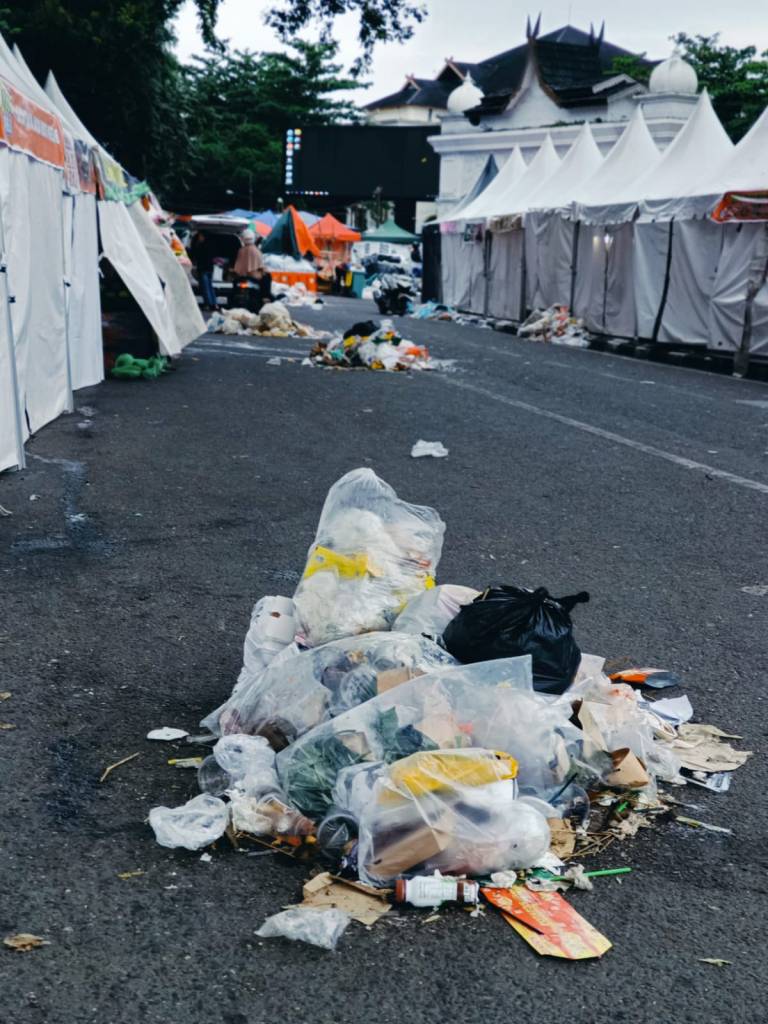
There was trash everywhere after the small traders’ bazaar in my city.
Many of us do not seriously consider the garbage produced in our homes or offices. Once the garbage is removed, it is no longer our concern. We leave it to the janitors to complete their work.
If all think the same, this world would have hundreds of new garbage mountains. A man results in an average of 0.5 kg of garbage per day, then a city with two million people would bear the burden of 1000 tons of rubbish.
That is an astonishingly large number!
Trash requires our attention. Disposing of it from home is insufficient. We must gradually enhance our awareness of handling trash by reducing, reusing, or recycling it.
How would you do that?
You have to minimize the garbage resulting from your house. From the beginning, you could select activities that reduce the rubbish. Simple examples such as selecting the takeaway food that uses recycled packaging or reducing food waste. Such action would help reduce the garbage and certainly save you money.
I brought up this topic because of the garbage management problem in my province. Out of 10 landfills, 6 are facing serious issues because they still use open dumping methods for garbage disposal. These landfills should implement sanitary or, at the very least, controlled landfill management practices.
In general, the managers of landfills reason that they couldn’t afford to buy soil to cover the garbage. The garbage amount is so high always increases as the population increases. While the awareness of resident to manage (reduce and recycle their garbage) is not improved.
If you love nature, you could start by managing your household rubbish.
I share this experience hoping that all my amazing friends can learn from it. Thank you for visiting my blog.




 my thoughts on the environment, travel and life reflections