In my belief, playing the lottery is considered haram. Let me talk about a different and more uplifting topic.
When meeting old friends, the conversation revolves around children, careers, and sharing information about other friends in college or the surrounding environment. For those whose social status is not good, such chats frustrate them. Nothing to tell from their side except the sad and disappointing ones. That is one of the reasons why many people reject reunion parties.
I understand their feeling. Old memories are only good to write about, not to retell, because their influence is not good psychologically. I feel tired after discussing old memories, even though, for others, they might be funny. However, they are different if written down. I can see more clearly from various aspects, learn lessons, and soften my heart.
So, after chatting about family and work, I usually ask what they will do in the future. It is really an interesting topic to explore.
This weekend, I had the pleasure of welcoming two old friends and their families to my home.
My friend, Idy, is working on a concept for a homestay that will be integrated with a poultry farm, focusing on preserving local poultry germplasm. He works as a consultant for a large poultry company in South Sumatra.
Another friend who came the day before, Hen, told me about the community empowerment activities she leads. He is implementing a waste management initiative project integrated with a poultry farm. This activity will contribute significantly to reducing domestic waste, including wasted food, if adopted by the government to be socialized on a large scale.
Reunions like this really leave something exciting and provoke new ideas in my head. I also asked myself, what will I do in the future?
I have such ideals and ambitions; however, they remain discourses. These thoughts are refreshing, beneficial for self-development, and will clearly contribute to the surrounding environment.
How about you? Do you have interesting ambitions for the future (after retiring from working in an office)?
In an interview, the President of Indonesia, Prabowo Subianto, expressed his admiration for the books of Paulo Coelho. Fortunately, I have some of his books and plan to reread them.
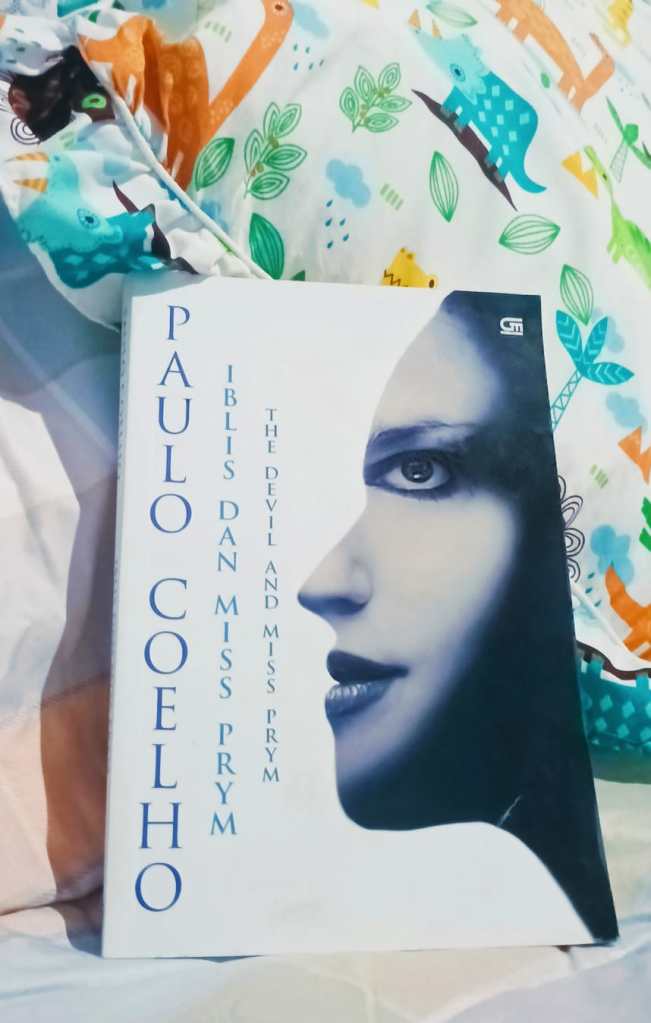
One of the books that I keep next to my bed is The Devil and Miss Prym.
Sometimes, books loved by famous figures can spark people’s interest in reading them, too.
Lately, I want to reread my book collection. I have no intention of buying new books. I used to have about 2000 books, and with my sister, I managed a community library. We have donated some books, and I only keep my favorites.
Along with Paulo Coelho’s books, I want to reread novels by Rosamunde Pilcher, who is my favorite novelist.
Ramadhan is coming soon. Muslims are making various preparations so that all the necessities and atmosphere in the household support performing prayers and fasting.
Like many generations that lived in the 1970s, I grew up with a simple lifestyle. Unlike today, when I can easily purchase various necessities for the fasting month—such as basic groceries, instant food, Takjil, and more—during my childhood, most of the cooking and baking for breaking the fast or for Eid was done by my mother, with help from other family members.
One thing that stands out to me as Eid approaches is the hustle and bustle at home as we prepare cookies and traditional foods. My mother was the master and trendsetter for cookies in our neighborhood. Almost all the mothers nearby came over to ask, “What cookies are you planning to make for Eid? Do you have any new recipes? Can I borrow the recipe?” They even borrowed cooking utensils from her.
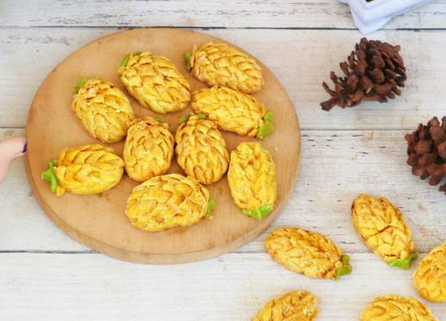
Nastar, the most popular cookies in Eid (The Lebaran Day)
The aroma of cookies could be smelled in the houses and on the streets, especially a week before Eid. That was the challenging time of fasting for kids. Amid their peak hunger, the smell of baking cakes could make them stop fasting.
In my house, there was a custom that all the children had to help make cakes. At that time, four of us were still in elementary school, and the other 2 were still in kindergarten. So, the 4 older children were the ones who had to help Mom.
My mother would start making the dough in the morning. She wanted the kitchen cleaned first. That was my job. My second younger sibling, Win, and the fourth, Doli, would mold and bake the cakes, while my third younger sibling, Cok, would wash all the equipment.
Mother used all her artistic skills to make cakes. Do you know about Nastar cookies? She molded them exactly like mini pineapples. Dad often told her not to do that.
“Appearance isn’t important. The cake will melt in your mouth in seconds.” He advised. However, my mother ignored him. The cake in the jar should look as good to her as it tasted.
After finishing baking, Cok had to wash all the equipment and plates. However, he often forgot and handed over the task to Doli. I complained to Dad because I felt sorry for Doli. He always replaced Cok’s duties, but it seemed that Dad didn’t care anymore.
Cok was the naughtiest child among us. He preferred to collect all the broken or slightly burnt cakes.
“This is still good for breaking the fast,” he suggested.
Although making cakes was a bit tiring, now I remember it as one of the best moments of my childhood. Through this activity, Mom taught us to work together and instilled cooking tasks were not only for women. The impact was positive. My brothers got used to household chores and now do them in their respective families.
Among my 4 brothers, I really appreciated Doli. He was very responsible in his duties, calm and never complained, and very neat. Before he passed away in 2018, I visited his house. His house was very clean and tidy. In his spare time, he was willing to help his wife clean the house and take care of their children. I think the influence of our parent’s home upbringing has made him a good husband and father.
Cok, the naughty child, has changed a lot. Unexpectedly, he is now a hard worker. Several times, I saw him bathing his children with the patience of a mother.
We once talked about the memories of cooking those Lebaran cakes while laughing. That was the childhood habit that united us, and now, just remembering it makes my heart warm, and missing my siblings.
I hope there will be another chance for us to meet. Maybe at one of our children’s wedding parties. The older I get, the more I miss my siblings.
Kurang tiga jam lagi waktu berbuka akan datang. Bapak belum pulang kantor. Ibu belum mulai masak meski dapur sudah dirapikan sejak tadi. Adik-adikku sudah kembali dari sekolah dan bermain sebentar dengan kawan-kawannya. Mereka tidak ribut seperti biasa. Tunak, rasa lapar menjinakkan mereka.
“Uang belanja habis,” ungkap Ibu semalam. Aku berada di dekat mereka dan menangkap pembicaraan itu.
“Besok Papa cari hutangan di koperasi kantor,” jawab Bapak, pelan tapi sepertinya yakin akan mendapatkannya.
Penghasilan PNS di tahun 80an tak sebaik sekarang. Bapak pegawai tulen, dia tak punya sumber pendapatan lain. Ibu stay di rumah mengurus keenam anaknya. Pernah sih Ibu buka warung kecil-kecilan, dibantu oleh Tulang (adik laki-laki Ibu) namun tak bertahan lama. Jajanan di warung lebih banyak kami yang makan. Uangnya tak ketemu.
Aku gak bakalan cerita betapa ideal dan penuh tanggung jawabnya orangtuaku. Kalian pasti akan berhenti membaca tulisan Kenangan Ramadhanku ini. Dunia ini tak semanis dan sebosan itu, kan?
Bapak akhirnya pulang. Dia membawa ikan mas. Wajahnya cerah meski lelah. Di usiaku yang belum 15 tahun, aku mulai paham masalah keuangan yang dihadapi orangtuaku. Bapak membeli ikan itu dari uang hutang.
Setelah aku dewasa dan menikah, aku pernah bertanya dalam hati, mengapa Bapak membeli ikan emas untuk makan malam kami? Mengapa tidak ikan asin/teri, atau ikan laut yang harganya jauh lebih murah? Bapak boros, dia tak harusnya memaksakan diri membeli sesuatu yang di luar kemampuannya.
Namun aku diingatkan sifat Bapak yang penyayang. Bapak ingin anak-anaknya bergembira saat berbuka. Rasa lapar anak-anaknya yang terpuaskan waktu berbuka adalah kebahagiaannya. Lewat puasa, Islam mengajarkan umatnya berempati terhadap orang miskin, agar mengenal Allah lebih dekat, dan menguatkan relasi antara penderitaan fisik yang akan bernilai ibadah selama dijalani dengan ikhlas, Bapak milih mengajarkan puasa dengan cara lembut dan membujuk. Anak-anaknya waktu itu baru berusia 15, 14, 12, 11 tahun, dan dua balita.
Selesai magrib, makan malam dan beberes sisa makanan, kami dilepas ke masjid untuk taraweh. Aku menyukai tarawih namun belum dilandasi taqwa. Aku suka karena di masjid aku dapat wawasan dan kenalan baru.
Suasana malam selama bulan Ramadhan jauh lebih hidup. Aku melalui warung dan toko yang penuh barang rumah tangga dan makanan. Aku bertemu kawan-kawan mengaji dan sekolah yang bersemi cantik dan ganteng, suka bersolek dan mudah senyum, karena sadar sedang diamati remaja lainnya.
Di pojok masjid, jika tirai pembatas saf laki-laki dan perempuan dibuka, aku bisa melihat dan mengamati wajah-wajah jamaah laki-laki muda dan tua, menyimak ekspresi mereka dan mereka-reka rumah mereka itu yang sebelah mana ya?
Ada proses berpikir yang mengalir di kepalaku saat itu. Berpikir, mengingat, dan mengaitkan satu dengan yang lain. Kegiatan olah pikir yang sulit dijelaskan tapi itu asik. Mungkin itu awal dari kesukaanku mengamati dan menuangkan gagasan ke dalam tulisan.
Sholat tarawih ke masjid seharusnya tak dilakukan anak-anak tanpa didamping orangtuanya. Ketiga adik laki-lakiku berangkat masing-masing, Bapak juga pergi sendirian. Itu jamak juga di keluarga lain. Aku lebih sering berangkat bersama Ibu, sekali-sekali diajak oleh tetanggaku sebaya.
Mengapa harus didampingi? Kenakalan remaja sebagian tumbuh dari malam-malam tarawih itu. Remaja laki-laki mulai merokok dan menggoda remaja perempuan yang melintas. Sebagian sih niatnya masih benar, ikut sholat sampai rakaat akhir. Namun lebih banyak yang duduk di sekitar masjid, berebut job parkiran sandal, atau pura-pura sholat di ujung rakaat.
Untunglah aku tak menyalahgunakan malam tarawih untuk kesenangan-kesenangan picisan. Meski kadang diajak oleh kakak-kakak tetangga yang sudah pintar besolek, obrolan mereka gres dan tawanya renyah, namun lebih nyaman bersama Ibuku yang ibadahnya khusu’.
Ramadhan mendekatkan aku dan Ibuku. Pertengkaran Ibu dan anak perempuannya yang konon meningkat di saat anak masuk usia remaja, tak terjadi pada kami. Aku dikawal, namun diberi keleluasaan memilih caraku menuju sholeha dan berilmu. Syarat kerasnya, tak boleh genit.
“Kasihan Papamu. Orang-orang akan membicarakannya jika melihatmu bergenit-genit di luar,” nasehatnya yang sangat aku ingat. Aku menyayangi Bapak. Aku Boru Panggoaran-nya. Nasehat Ibu whoosh, langsung menancap ke hatiku.
Bagaimana dengan adik laki-lakiku? Mereka tengah berjuang untuk memperbaiki kehidupan dan keimanannya masing-masing. Jalan mereka cukup terjal. Teruslah berjuang, adik-adikku.
I once asked my late mother what my first name, Asnelly, meant. She said she didn’t know.
Your father came home one day and said his first child would be named Asnelly. He was sure a baby girl would be born, not a baby boy.
I was my father’s favorite child. I remember the moments we spent together to and from school. He bought me a cute bag and cookies for my lunch box. He took me to the beach to walk on the sand and listened to stories about my activities at school.
The name Asnelly is rare, unlike Rini, Dewi, or Siti, which are very common in my city. But I like my name. It’s a beautiful and soft name. My last name, Daulay, adds to its uniqueness.
Thanks to the advancement of search engines. When I checked the meaning of the name, I felt that it fit my personality quite well.
She (Asnelly) tends to lead with authority and is always looking for adventure. She is very interested in life and has an independent nature. This person also speaks frankly and is physically attracted to others.
The name is a prayer. Hopefully, the good things in the meaning of my name will come true.
Once, my husband had to go to work, and I was sick. Our children were still very young. They were under 12 years old.
I moved to another room to rest. Beside my bed, my husband had put warm drinks, cookies, tissues (I had a bad flu), and so on. After taking the medicine, I slept very soundly.
When I woke up, I met the worried eyes of my youngest child. He looked at me with his innocent face. He had been sitting there for quite a while without making a sound.
“Mommy just needs to sleep. Don’t worry,” I said.
He asked if I needed anything and left the room when I asked him to bring more mineral water.
My oldest child, in contrast, did not show any concern for my condition. The faint sound of the PlayStation game from the living room drifted into my room. He turned on the light once or twice as if searching for something in the room where I was lying.
That’s bothering me. I shouted to turn off the light and come out immediately.
After I recovered, he admitted that he wasn’t looking for anything. He just wanted to check on me. “I came to check your breath, Mama.”
Oh, he was actually worried that I wouldn’t wake up again but did not show it at that time.
I still remember the attention ever given by my children. They showed it in different ways, according to their respective characters.
I believe that paying attention to family members who are unwell or feeling sad can help lift their spirits. Much of our suffering comes from a lack of attention. One can survive in poor economic conditions, but a lack of attention from loved ones is more painful.
I have known diaries since elementary school. In my place, children my age did not have diaries. Luckily, my father was a librarian. He was surrounded by books. He allowed me to subscribe to a children’s magazine, Bobo. From that magazine, I learned about diaries and how children in Europe and other developed countries used to write their thoughts in diaries.
Diaries became a solace when I was sad or happy with new experiences. My attachment to diaries grew stronger over time. Until my married life, I still routinely write diaries.
There was a funny moment when my husband secretly read my diary after an argument to find out how I felt.
Diaries are not only a medium to express feelings and thoughts and keep secrets. Diaries also encourage me to construct sentences correctly and well.
Diaries have given me comfort for years. I once tried to teach that habit to my sons, but they preferred sports to writing. I’m not sure, but I think gender plays a role here. Only women like to write diaries, while men don’t.
I am the type of person who thinks more about the past. It happens naturally, maybe due to the age.
Some memories are indeed painful. I often recall them. The memories just come. Among all of them, the death of family members has a deep sadness on me, especially the death of my parents and my younger sibling. Among the three, my younger sibling’s death was the most painful. I blame my inability to help him in his last moments of life.
Things outside of death have less impact on me. Some even make me feel silly and embarrassed and remind me of my limitations as an ordinary human being who is not free from mistakes.
Taking time to remember things that happened in the past is beneficial. It can lead to wisdom and awareness of one’s position in the universe; we are just a speck of dust whose destiny is not entirely determined by ourselves; the rotation of the universe also influences it.
Returning to the death of my younger sibling, the sadness I feel decreases as time goes by. I am determined to help my late brother’s children complete their education. My sister and I worked together to help them, occasionally taking the deceased’s wife and children out for a family picnic.
I am the type of person who thinks more about the past. It happens naturally, maybe due to the age. A part of me still lives in the past. Anyway, I try looking at it from the positive side. It is beneficial for making more mature and less emotional plans/decisions.
I once asked my sons jokingly, “If one day you were going to give Mama a gift, what gift do you think I like the most?”
My youngest child, who was then in elementary school, immediately answered, “Perfume.” He guessed right. He watched me daily and knew my style.
Yes, I love perfume. It can lift my mood. I feel incomplete without spraying perfume after a shower, even if I was just at home all day.
The next gift I like is a large genuine leather handbag. The tote bag type is my favorite. A large handbag ensures that all the necessities are accommodated, including a laptop, cosmetics, and a tumbler. The bag adds to my self-assurance.
The next gift I like is flowers, especially the broad-leaved ones. This type of flower gives a classy and expensive impression.
By the way, among my family members, my youngest child and my sister understand best what I expect as a gift. Without previously asking, they surprised me with the gifts.
How about the others? They prefer to treat me to dinner out as gifts or ask first and then present the gifts.
It’s the rainy season here. Plants in my garden sway and look fresher and greener under the pouring rain. While sipping warm tea, I remembered my childhood under my parents’ roof.
We lived in a small town. My late father was a civil servant with a low income. He was a librarian. Life was not easy; he had 6 children, but I never saw him stressed with such a burden.
On the contrary, I saw him trying to bring happiness to his big family. On rainy days like this, he gathered us in the living room to play dominoes or cards. He gathered us so we wouldn’t play in the rain, which would make Mom angry because it would add to the dirty clothes that had to be washed.
You can imagine how noisy our living room was at that time. 4 players (Dad, me, and my two brothers) and three little babies watched the game. We played without strategy, but everyone wanted to win.
On a rainy day, one easily gets hungry. Can you guess what snack Mom gave us? She cooked boiled or fried cassava. It was a cheap snack, but when we ate it after playing and laughing together, we were like other families who lived more prosperously.
Sometimes, Dad had to work overtime and then took me and my younger brothers to the library. I got acquainted with several magazines and biographies of famous people in Indonesia. While my brothers ran along the bookshelves, I was immersed in reading. That was where I began to grow my interest in reading and writing.
The rain had brought back that simple moment of the past. It was so clear like I was watching a movie.




 my thoughts on the environment, travel and life reflections