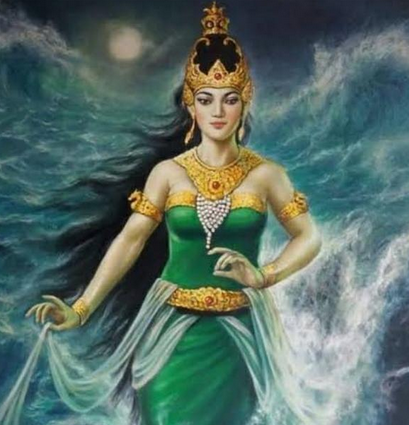
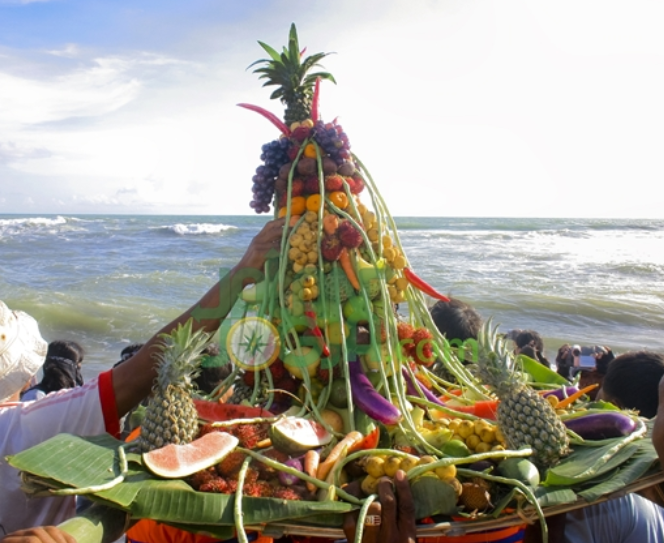
A superstitious figure in the sea off Java Island. She is believed to be the protector of the people. Every year, a ceremony is held to deliver offerings to the queen of the southern sea.
In some areas in my country, traditions mixed with superstition still exist, even becoming tourist attractions and annual agendas.
However, some people see it only as mere culture (traditional clothing, dances, and rituals). So when they come to activities that have elements of superstition, they only want to immortalize the moment with photos or videos,
The values of superstition and religion are contradictory. Pious people avoid doing superstitious things. However, the tourism industry does not recognize the term superstition. If an event can attract thousands of people, they will manage it for money.
At the popular tourist agenda of offering to Nyi Roro Kidul on the South Coast of Java Island – as an example, many religious people also gather. They come as groups that organize events, sell food, offer souvenirs, and provide other services.
Well, in such conditions, superstitious activities can be economically beneficial.
 my thoughts on the environment, travel and life reflections