Who doesn’t know papaya?
I think everyone must know papaya. This yellow-to-orange fruit grows effortlessly and bears fruit all year round. In Asian countries, papaya is commonly served as a dessert along with oranges and bananas.
Papaya can grow itself because its seeds are accidentally spread when someone throws them out of the trash. It is not surprising that many papaya trees are found around houses with yards.
This is my friend’s story. Her house in the countryside was surrounded by a subsistence garden that produced vegetables and fruits. There were many papaya trees around the house.
Because her family is quite large, the mother manages her expenses carefully. Their garden brought about eggs, vegetables, and fruits to meet the family’s food needs.
Rather than buying other fruits, Mother served papaya on the dining table every day. My friend felt nauseous seeing and eating papaya, but she and her siblings had to eat. Her parents did not allow food to be wasted.
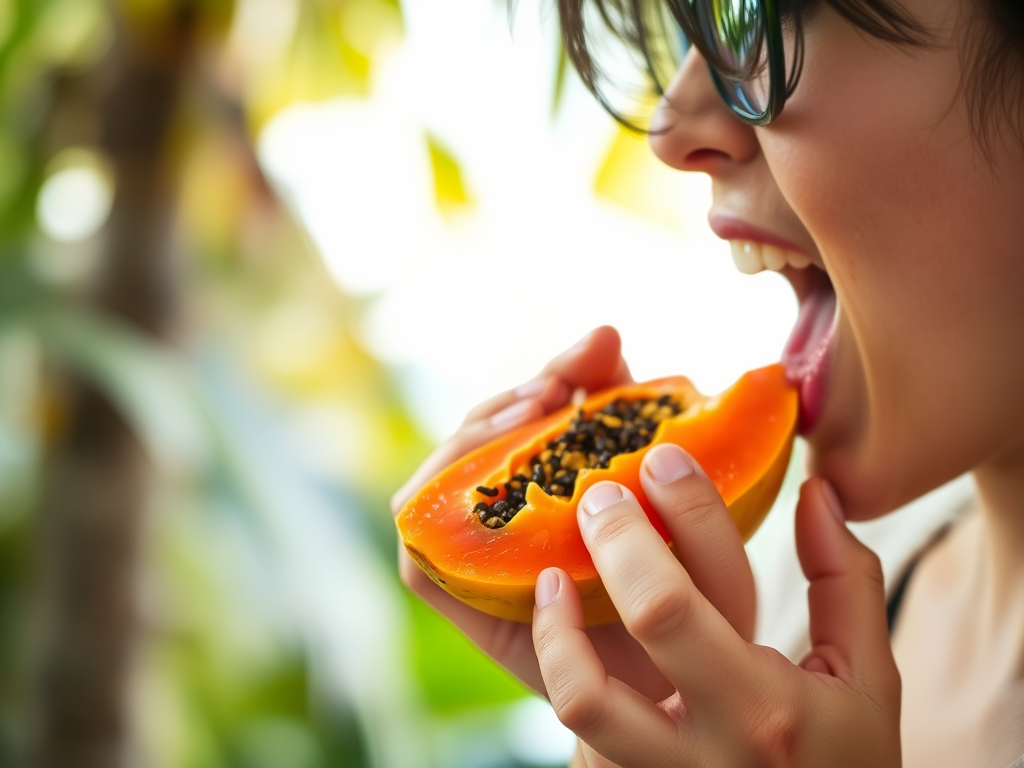
No day without papaya was so attached to her mind. When she got a job and earned his own income, she stopped eating papaya.
“It’s a relief not to see papaya on my dining table anymore,” she said and laughed.
Indeed, papaya was once associated with the lower-income group. Papaya used to have no market value, in contrast to grapes, apples, and pears, which are known as fruits for the middle class and are a bit expensive.
Now, Papaya in Indonesia has a selling value. The new variety of California papaya captures the hearts of consumers with its orange flesh and skin and sugary taste. This type is sold in supermarkets, unlike local papayas, which are usually sold in traditional markets or on the side of the road.
My friend started eating papaya again, although not every day.
I’ve made peace with papaya, she said, again laughing.
 my thoughts on the environment, travel and life reflections